
March Notes
Beatles, Scientists, Cyclists, Communists and Sheepdogs

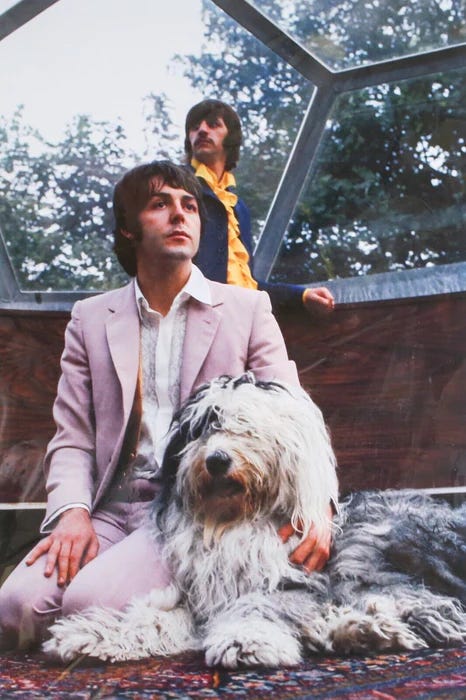
March was a hard month. To break up the stress, and responding to the joyous spring weather, I got my bike out of storage. I was always too frightened to cycle in London, which is just sensible self-preservation as far as I’m concerned, but now I live in the West Country I’ve no excuse. So I wheeled it round to my local independent bike shop, who were utterly delightful and didn’t make me feel at all ignorant or amateur (both of which I am). After a full service and the installation of some new lights and a pannier rack, they called me to collect. Now I can cycle to country pubs, bimbling along rural cycle paths and quiet lanes, without a car in sight. Always wearing a helmet and high vis, never ever wearing lycra. Over the warmer months I’m looking forward to exploring this landscape in a new way, hopefully without succumbing to the tech bro world of dreary route planner apps.
Some Books I enjoyed this month
The Stella Prize longlist was announced this month, a prize I like because it always introduces me to books that I genuinely wouldn’t have heard of otherwise. From this year’s nominees I’m particularly drawn to Black Convicts by Santilla Chingaipe, but as with so much Australian literature it’s sadly not available in the UK. I have however been dipping into several excellent books newly published in the UK, including:
Jesus Wept: Seven Popes and the Battle for the Soul of the Catholic Church by Philip Shenon
The Alienation Effect: How Central European Emigres Transformed the British Twentieth Century by Owen Hatherley
Of the books I finished and enjoyed this month, the non-fiction were all biography and the fiction all historical. I suppose in a time of stress I wanted to be lost in other peoples’ worlds, in their problems rather than my own. Reading as edifying distraction is no bad thing. I read three particularly interesting novels by men which I will be discussing those at length in an upcoming post…
John and Paul by Ian Leslie - I absolutely loved this, of course. My appetite for Beatles books is endless and this is the very best kind, focusing on the emotions and the music of the story. It’s rare to read a book about The Beatles that is not characterised by a strong preference for either Paul or John, and it is so much the better for it. It’s not so much about new facts but new perspectives, new ways of thinking about The Beatles, and Leslie delivers that in spades. Reading John & Paul genuinely made me listen to their music anew. He’s also excellent on women, not least the influence of girl groups on The Beatles, and I found myself reading this purposefully slowly because I didn’t want it to end. There’s even a whole chapter on Martha!
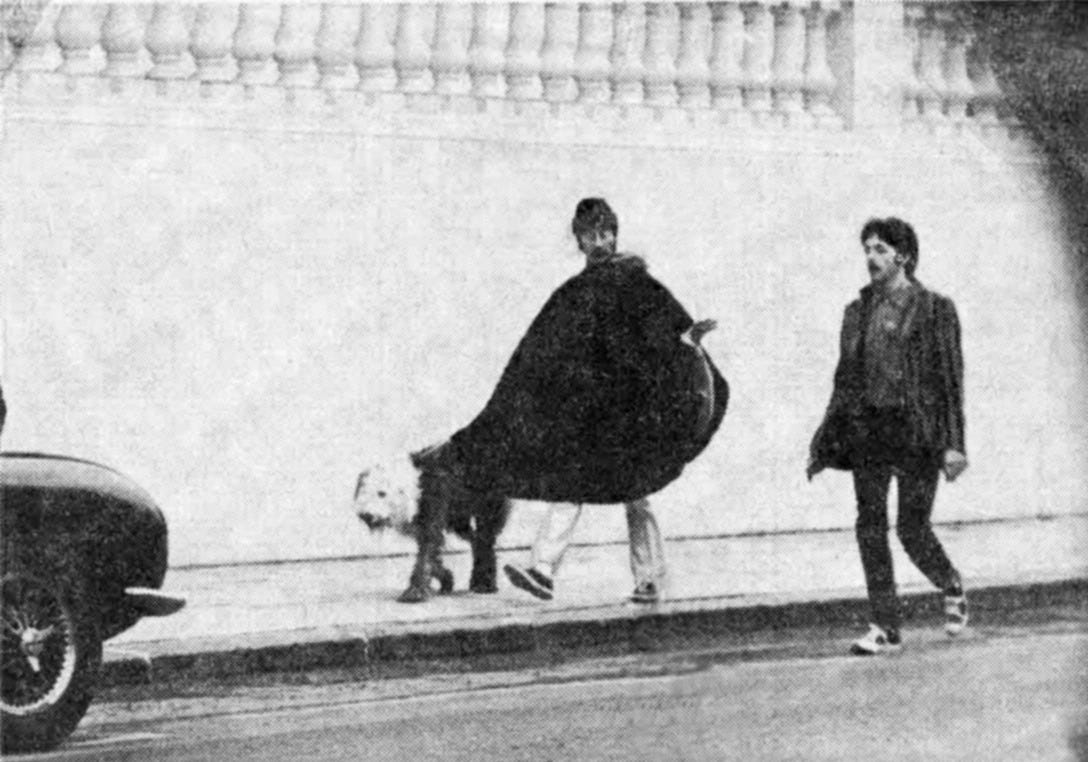
The Elements of Marie Curie by Dava Sobel - I almost didn’t include this because it was a frustrating read, but it’s short and worth a go. The problem is that Sobel is trying to do too many things in too short a space. This is a biography of Curie that also attempts to be a biography of every woman Curie ever worked with. These other female scientists, who Sobel punningly calls ‘radioactivists’, are sadly far too thinly sketched to have any impact on the reader. Portraying Curie as just one of many scientists also risks losing sight of quite how extraordinary she was, and this would have been a more rewarding read if it had instead focused on Curie as a feminist figurehead, mentor and pioneer. Nevertheless, some of the best Curie stories are briefly covered here, like when she tried to donate her two gold Nobel medals to the war effort but the Bank of France refused to take them. Or her science lessons for the Spanish king and queen, her tour of Brazil, and hiking holidays with Einstein. It made me realise I would love to read a good book about The International Committee on Intellectual Cooperation, does such a thing exist?
Sobel is best when writing about Curie as a mother. Unusually for the time, both Curie and her eldest daughter Irène first gave birth in their thirties, and were dedicated parents alongside their scientific research. Her younger daughter Ève was not a scientist but extraordinary nonetheless. An international war correspondent and author of Journey Among Warriors, she later dedicated her life to good works for UNICEF. The Curie daughters are excellent examples of what women can do when they are encouraged and intellectually nurtured from a young age.
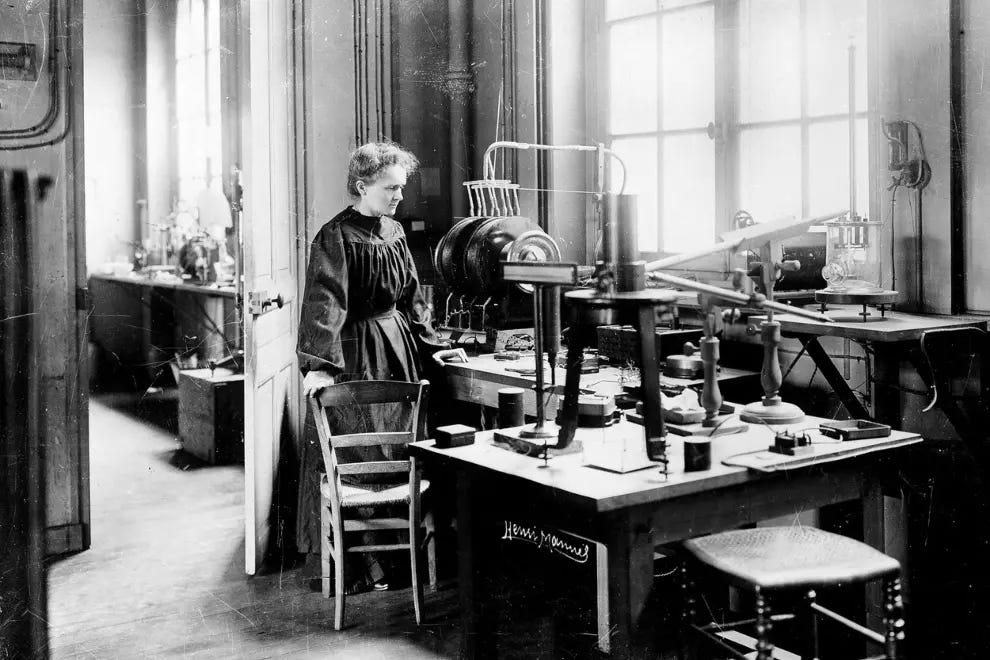
Interesting Times: A Twentieth Century Life by Eric Hobsbawm - Unsurprisingly, I had a great time reading this memoir by Britain’s most famous communist historian. It’s extraordinary that I hadn’t read it before. Hobsbawm tells his own life story through the historical moments around him, and as an artefact from last pre-war generation of Central European Jewish intelligentsia, it made for a great companion read with Hatherley’s The Alienation Effect. Hobsbawm’s was a truly international life, facilitated by a grasp of several languages, but touchingly, he returned each summer to France and Wales. Oh I how I could relate.
Interesting Times is Hobsbawm’s vantage point on the grand sweep of history, and ultimately is about not only why he was a communist, but what it felt like to be one throughout the twentieth century. Initially told chronologically, there is a verve when he writes about his continental youth and the war years. He’s more reserved about his later life, there’s nothing on his being a father for example, and these later chapters are thematic, peppered with memories of the many fascinating people he has known. Only two chapters are specifically devoted to his experiences as a historian, but we have On History for that. It’s surprisingly insightful on the joys and benefits of having career success later in life, and serves as evidence for Hobsbawm’s stance that nothing serves a historian better than keeping your ears and eyes open. Reading Interesting Times in 2025, it felt like an unexpected lament for a long lost Europe.
Not Just The Books
I’m Still Here / Ainda Estou Aqi
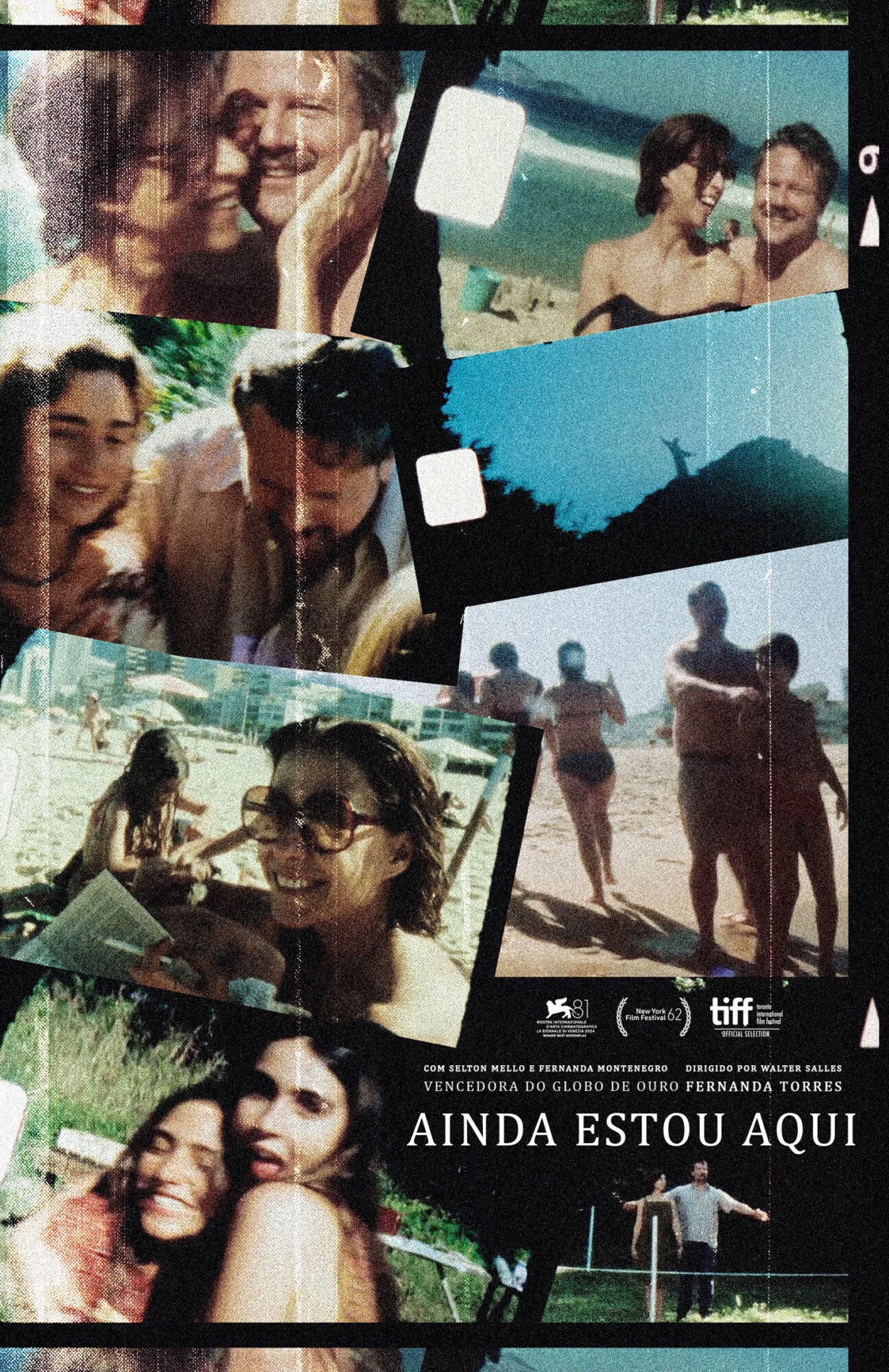
On a gloomy Wednesday evening I went to my local Picturehouse to watch this brilliant film, and I cried and cried and cried, and the cinema manager took pity on me and we had a nice chat afterwards about film. You don’t need to know anything about Brazilian history to enjoy I’m Still Here, which is just as well because most people from this little island don’t. Based on a true story (inspired by Marcelo Rubens Paiva's memoir of the same name), it’s set during the during the military dictatorship which lasted from 1964 - 1985. I’m Still Here is not gruesome or explicitly violent (and features some gorgeous 70s music and fashion), but is brilliantly atmospheric, and Fernanda Torres is outstanding as the main character Eunice Paiva. When it was released the Brazilian far-right, who deny that the US-sponsored military regime was a dictatorship, tried to organise boycotts of the film. That says it all. Highly highly recommend.
The Way We Wore
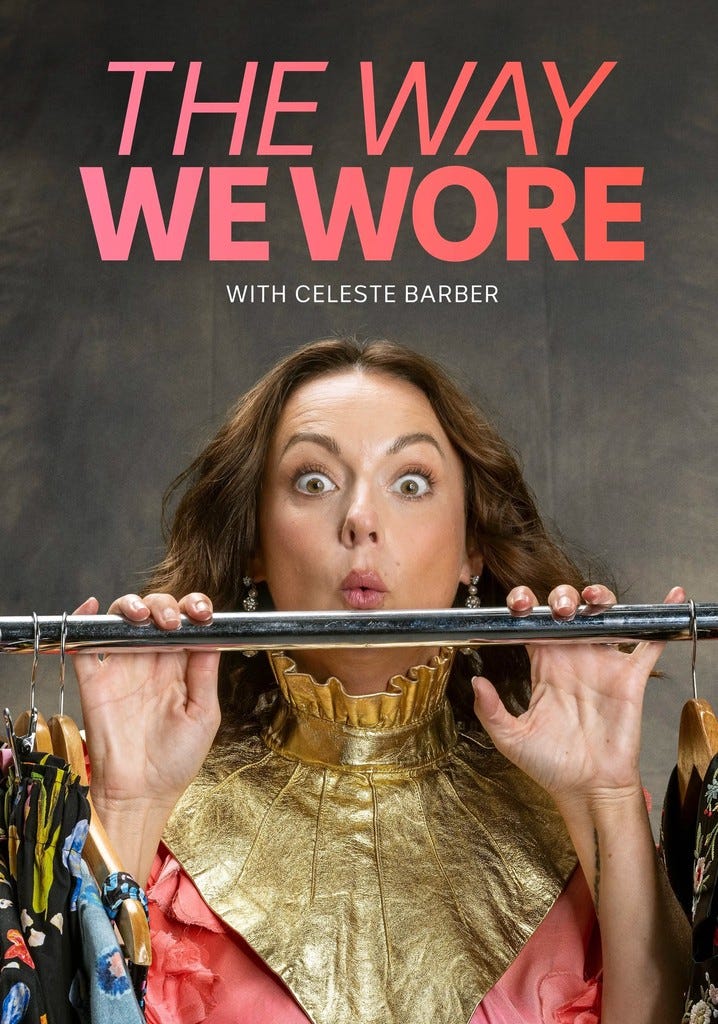
This is a snappy documentary about the history of the Australian fashion industry, presented by the very likeable Celeste Barber. By giving the Australian perspective on fashion history it tells a familiar story with different offshoots, so alongside Dior’s post-war New Look, we have the power of beach/resort wear and surf culture, and the rise of Aboriginal designers. It does a fairly decent job of addressing the dark side of fashion, though I did find it curious that when talking about the recent decline of the Australian garment manufacturing industry, all of the talking heads referred to clothes now being made ‘offshore’. No one explicitly said that all of these garments are now being made by exploited labourers in Asia. In the same way that I love reading non-fiction in translation, I want to watch more documentaries not from a UK/USA perspective, as that is what made this one stand out.
Mes petits plaisirs du mois
Blue skies! Sunshine! Daylight! All of a sudden!
Making the most of the sunshine by going down to Bournemouth. A dreadful town but stunning beach.
Fat noisy bumblebees wafting around.
Leeks, slowly cooked in butter. Cabbage, fried with lots of chilli.
What Rae Reads diary vlogs.
The fact that my city is surrounded by fields. Walk in any direction and within fifteen minutes you’re in proper nature.
Meghan being back.
Last One Laughing on Amazon Prime. Loathe as I am to support Amazon, or more programmes being made without writers/costume designers etc, this one is fun.
Provincial Booksellers Fairs Association events. If there’s one happening near you, go.
Using a handheld magnifying glass with a built-in light to read books with tiny fonts on evening trains.
New Girl. I’ve never watched it before and found it surprisingly fun, though some of the noughties outfits are triggering.
And Finally…
I have no plans to cycle around Sardinia but I love everything about this video, not least that Belén wears a pretty, billowing top throughout, proving that you don’t have to wear lycra to cycle!